Your Head Isn't Round: The Asymmetry Reality
Grab a mirror and look closely at your head. It's not a smooth, perfectly symmetrical ball. Nobody's is.
Your skull is a complex 3D shape formed by multiple fused bones. And here is a secret that mass-market wig companies never mention: over 90% of all adults have noticeable cranial asymmetry.
Your left side might be slightly flatter than your right side. Your forehead might slope back more steeply on the left temple. The distance from your ear canal to the top of your head is rarely identical on both sides. We see differences of up to fifteen millimeters between the left and right sides of real client heads every single week.
Now think about how cheap factory wigs are made. They're stretched over symmetrical, perfectly round plastic mannequins. When you place a round, rigid cap onto an asymmetrical real human head, tension can't distribute evenly. The fabric naturally slides away from high bone curves and slips toward areas of least resistance. That pulls the lace sideways across your forehead—and drags your parting line right along with it.
The Elastic Tug-of-War: Why Glueless Straps Buckle
Every time you speak, chew lunch, smile, or turn your neck, your scalp and facial muscles flex. Those tiny muscle contractions exert continuous pulling force on your wig cap.
In glueless wigs, people rely on adjustable nape straps or tight elastic perimeter bands to keep the unit secure. But standard elastic bands create a simple two-point pulling vector from temple to nape. It's like pulling the drawstrings on a hoodie: the edges get pulled tight around your ears, but the excess fabric right across your crown buckles upward into a loose tent or wave.
That creates a dead air gap between your scalp and the lace right along your part. The second you step into outdoor wind or turn your head quickly, that unanchored lace shifts sideways over your scalp. What looks like messy hair isn't messy hair at all—it's the entire lace foundation sliding across your skull.
The S/M/L Sizing Trap: Why One Number Fails
Commercial wig brands sell caps using a single measurement: head circumference (Small is 21.5 inches, Medium is 22.5 inches, Large is 23.5 inches).
In cranial engineering, relying solely on circumference is like buying a pair of running shoes based only on your foot length, while completely ignoring your foot width, arch height, and instep volume. It's a recipe for blisters and pain.
Look at two real clients who both have a 22.5-inch circumference:
- Client A: Long and narrow from front to back. A standard Medium cap will be excessively loose above her ears, causing side partings to collapse outward and puff up like ear flaps.
- Client B: Short and wide from ear to ear. That exact same Medium cap will be pulled taut across the sides, causing the center parting line to buckle upward like a pitched roof.
| Cranial Measurement | Standard Medium Wig | Why It Matters for Partings | Failure Sign If Off |
|---|---|---|---|
| 1. Circumference | 22.5 inches | Sets perimeter anchor tension | Cap rides up at the nape or squeezes ears |
| 2. Front-to-Nape | 14.5 inches | Governs sagittal crown flatness | Excess lace bunches into folds along the part |
| 3. Ear-to-Ear (Over Crown) | 12.5 inches | Controls lateral side-to-side tension | Parting shifts toward the looser hemisphere |
| 4. Temple-to-Temple | 15.0 inches | Anchors the front hairline flat | Frontal edges lift and show lace borders |
Knot Ventilation Angles: Flat vs 45-Degree Hand-Tying
Even if a cap fits snugly, your parting will misbehave if the hairs were ventilated into the lace at the wrong physical angle.
When factory workers hand-tie hairs into lace, they use a tiny ventilating needle. How they loop that hair dictates which direction the strand wants to fall naturally:
- Flat 0-Degree Knotting: The hair is knotted flat against the lace surface. If you try to part this hair down the middle, the roots have zero natural lift. They lay flat and lifeless against the base, and neighboring strands cross over each other constantly, blurring the clean parting line.
- Perpendicular 90-Degree Knotting: The hair stands straight up out of the mesh like a toothbrush bristle. This gives wild volume, but the hair has no directional memory. It flops around randomly with every gust of wind.
- Anatomical 45-Degree Knotting: This is how master wigmakers ventilate. Hairs along the left side of the part are knotted at a 45-degree angle facing left; hairs on the right are knotted at 45 degrees facing right. The hair naturally falls open away from the part with zero product required.
If you're fighting your parting with ten layers of freeze spray every morning, chances are the factory knotted that hair in the wrong direction. You're fighting the knot's built-in physics.
Gravity & Hair Weight: The Long Bundle Lever Arm
A bundle of 24-inch or 26-inch hair is heavy. When you wear a full lace wig with 250 grams of long hair, that weight acts like a mechanical lever arm pulling down on the cap foundation.
If the weight isn't distributed evenly across the crown, gravity takes over. The heavy back bundles pull downward toward your shoulders. If your front hairline isn't anchored securely, that backward drag slowly pulls the front parting line backward and upward, widening your forehead and shifting the part out of alignment. That's why custom pieces need strategic internal balance bands.
The Wall-of-Hair Mistake: Why Heavy Density Collapses Parts
Wig buyers often think: 'More density equals more luxury!' So they order 200% or 250% density frontals.
That's one of the biggest mistakes in hair styling.
On a real human scalp, hair density right along the parting line is naturally light—around 80% to 100% density. You can see tiny glimpses of clear scalp between individual follicle roots. But when commercial factories pack 200% density right up to the edge of the parting line, they create an unnatural wall of hair.
Those tightly crammed hairs push against each other with immense lateral pressure. The strands on the left crowd into the strands on the right. Within an hour of styling, that lateral pressure forces the hair to collapse inward, closing up the parting space and creating a bulky, helmet-like ledge.
Why Hot Combs Can't Override Bad Cap Physics
Every hair tutorial tells you to solve parting problems with a 450°F electric hot comb and a wax stick.
Yes, clamping a scorching hot brass comb down on your parting line will melt the keratin flat for a little while. But heat and wax only alter temporary hydrogen bonds. They don't change how the lace sits on your skull, and they don't change the knot angle tied into the mesh.
The moment you step outside into humid air or start sweating, those temporary hydrogen bonds absorb moisture and reset to their natural state. The hair pops right back up, the wax melts into a sticky film, and your crisp part vanishes. You can't hot-comb your way out of a bad foundation.
Smart Cap Engineering: Darts, Silicone Grips & Contour Seams
So how do bespoke wigmakers build partings that stay razor-flat and stationary all day without glue?
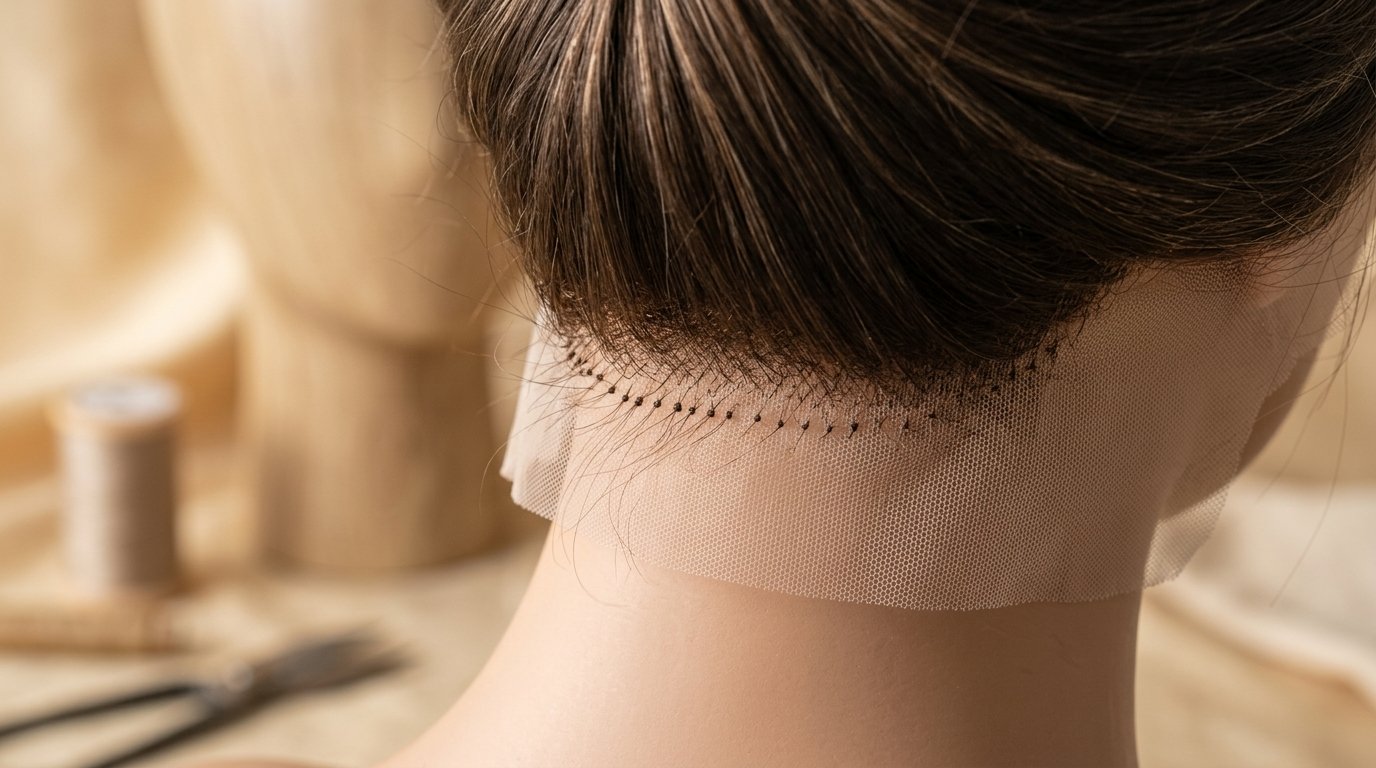
- Tailored Darting: Just like a bespoke suit jacket, we sew curved micro-darts into the lace base. These darts pinch out excess slack along the crown, molding the flat lace into the exact 3D curve of your unique skull.
- Medical Silicone Grip Strips: We place hypoallergenic medical silicone bands along the parietal perimeter. The silicone grips your skin or hair gently through natural friction without pulling, stopping the foundation from migrating backward.
- Directional Tension Ribbons: Strategic interior silk ribbons distribute the weight of long hair forward and downward, keeping the crown completely flat against your scalp.
Off-the-Shelf vs Bespoke: When Custom Molds Are Essential
If you're buying a simple, loose-fitting wig for occasional weekend wear, a standard off-the-shelf cap might be fine. But if you're dealing with medical hair loss (alopecia, chemotherapy), or if you wear hair systems daily for work, off-the-shelf sizing will constantly frustrate you.
When you have sensitive scalp skin or no bio hair to anchor into, every millimeter of cap slack causes slippage, friction sores, and shifting partings. That's when a true 3D cranial cast becomes essential. A mold captures your exact bone contours, ear heights, and hairline slope, creating a second-skin fit that stays rock-solid all day.
The Silky Fusion Blueprint: 6-Point Head Mapping
At Silky Fusion, we don't believe in generic 'Small, Medium, Large' guesses.
Before we build a custom unit, we guide you through our comprehensive 6-point cranial mapping protocol on a live video consultation. We measure your exact circumference, front-to-nape arch, ear-to-ear span, temple points, and nape curve.
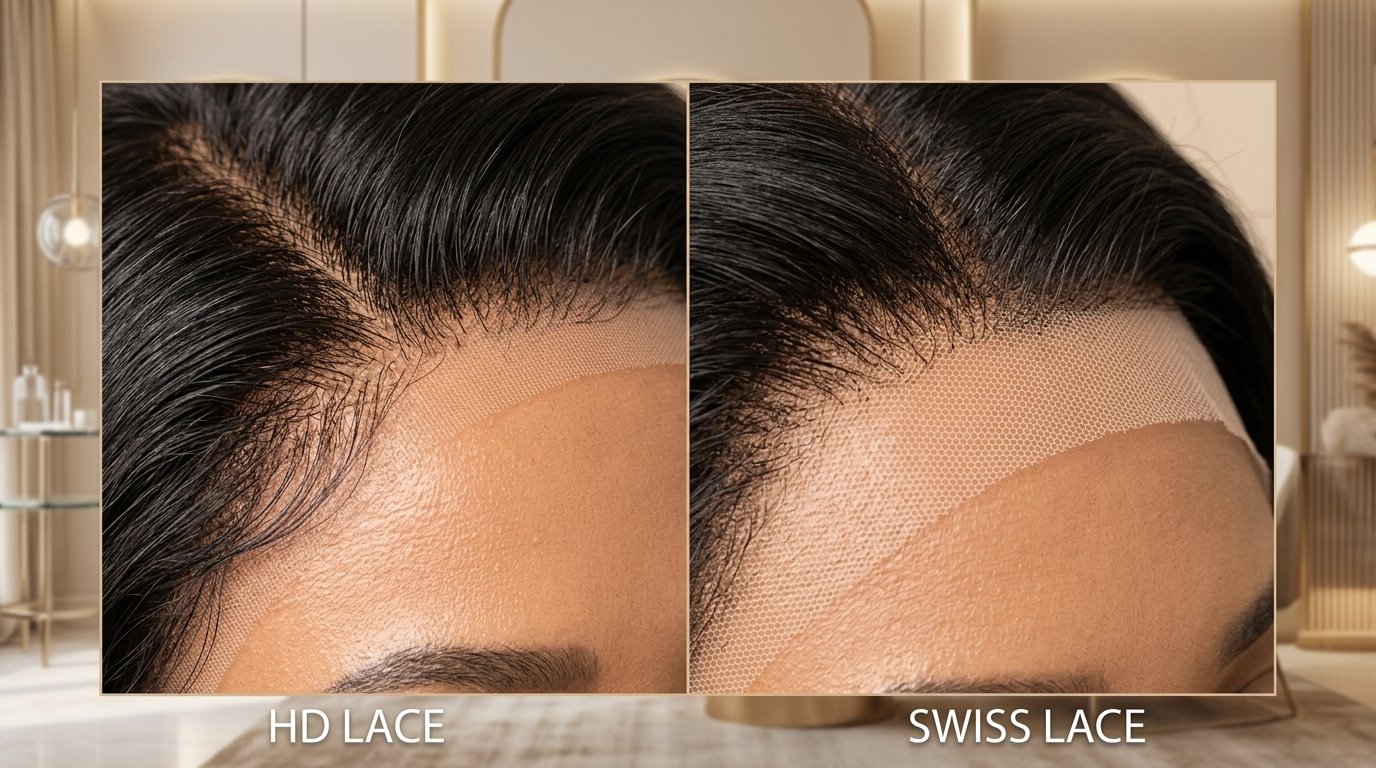
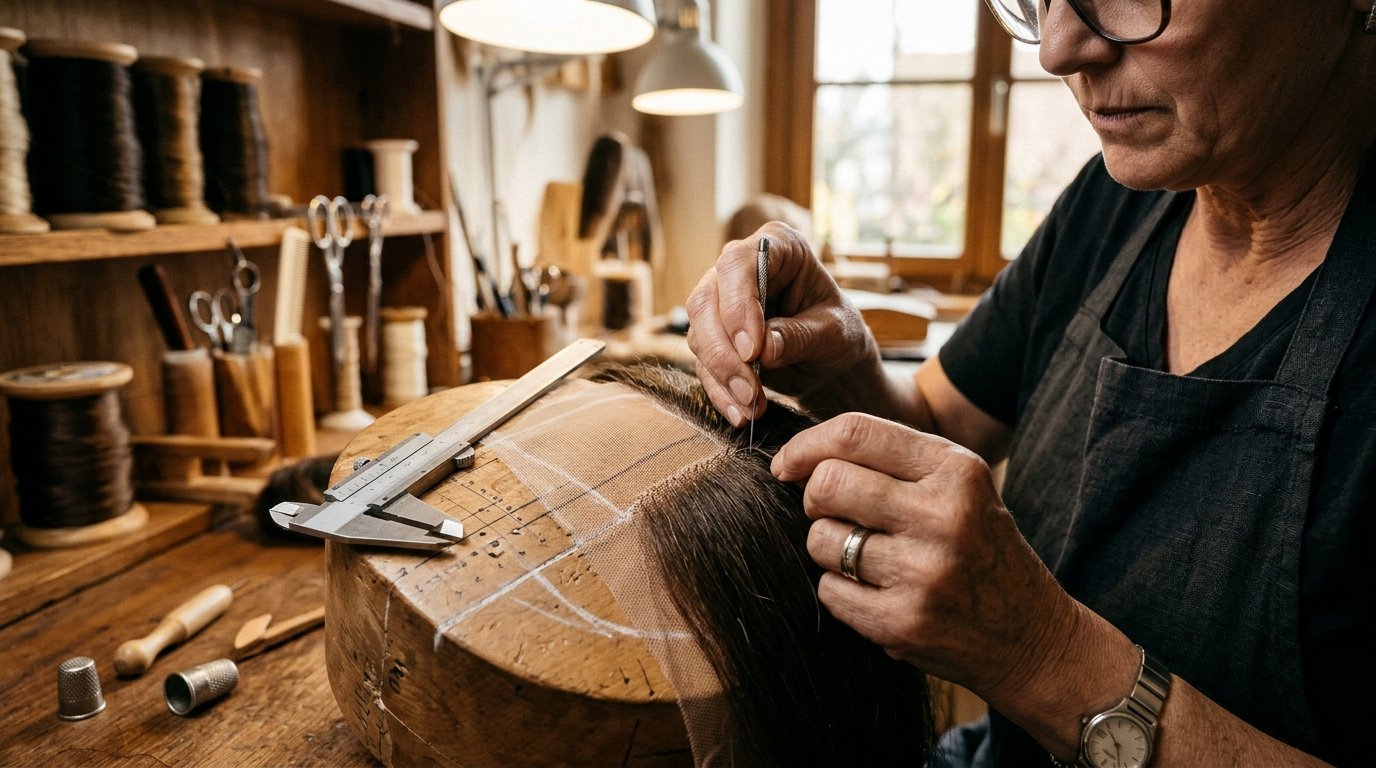
Our master wigmakers then sculpt a custom wooden mold matching your exact skull geometry. We hand-ventilate every single hair along your parting line at an anatomical 45-degree angle using single micro-knots on ultra-thin Swiss lace. When you put the piece on, the part falls naturally into place with zero effort. It stays flat, stays sharp, and never moves an inch.
No bunching. No bulging lace. Just flawless, natural hair movement.