The High Cost of the Melted Illusion: 3 Months to Baldness
We've all seen the viral 15-second transformation videos.
A stylist slathers blue bleach powder and 40-volume developer over the underside of a brand-new lace frontal. Thirty minutes later, she washes it off. The dark knots are completely gone. She installs it, and the lace melts into the forehead like pure glass. The comments go crazy: 'What lace?! It's growing out of her scalp!'
It looks phenomenal for about eight weeks.
Then reality hits.
By month three, you notice hair falling out every time you run a comb through the front. By month four, there's a visible bald patch right at the center parting. By month six, the entire frontal hairline has retreated two inches back like a receding hairline on an old man. You spent $800 on a luxury wig, and now it's unwearable.
What went wrong? You didn't do anything wrong. You're just paying the hidden tax of bleached knots.
What Bleach Actually Does to Knots: The Persulfate Acid Rot
Let's look at the chemistry of what happens when you put bleach on a knot.
Bleach powder contains potassium persulfate and ammonium persulfate. When mixed with liquid hydrogen peroxide developer, it creates an intense alkaline oxidation reaction (around pH 10.5). That alkaline chemical soup is designed to blast open cuticle scales and destroy dark melanin pigment.
On normal hair strands, a careful stylist watches the clock and rinses bleach out before the core dissolves. But on a wig knot, you're not bleaching a loose strand. You're bleaching a tight, microscopic knot tied around a sharp nylon lace thread.
Bleach doesn't just lighten the pigment. It chemically hydrolyzes the keratin proteins, stripping away up to 60% of the hair's internal tensile strength right at the bend of the knot. You're essentially melting the weld that holds the hair onto the cap.
The Knot Loop Tension
A hair strand tied to lace is bent at a sharp 180-degree angle under continuous mechanical tension. When bleach eats through the outer cuticle scales at that sharp bend, the internal microfibrils snap like an overstretched rubber band under the slightest combing pressure.
Knot Geometry: Why the Apex Snaps Before the Rest of the Hair
Why do knots break so much faster than the rest of the hair on your head?
It comes down to mechanical geometry.
When you brush your hair, pulling tension travels down the strand. On natural hair growing out of your scalp, that tension is absorbed by living dermal tissue and flexible roots. But on a lace wig, every single gram of pulling tension stops dead right at the knot apex—the sharp bend where the hair loops through the lace hole.
Now consider what bleach does to that tiny loop:
- It eats away the protective cuticle armor on the outer curve of the bend.
- It thins the shaft diameter right at the point of maximum mechanical leverage.
- It hardens the remaining protein into brittle glass that cannot flex.
The next time you brush your hair back into a ponytail, that weakened knot doesn't untie. It literally snaps in half right at the bend. The hair falls out, and the broken root stays trapped inside the lace hole forever.
The Lifespan Drop: How Bleach Cuts Wig Life by 75%
Let's look at real-world numbers from our repair workshop.
An authentic raw Indian temple hair wig that has unbleached knots easily lasts between 3 to 5 years of regular wear. The roots stay strong, the hair flexes naturally, and shedding is minimal.
Take that exact same raw hair wig and aggressively bleach the knots with 40-volume developer to get that zero-knot look. The lifespan drops like a stone: 6 to 9 months max before the hairline sheds into bald patches and requires a complete frontal replacement.
You're sacrificing three years of lifespan just to get an aesthetic shortcut that could have been achieved safely with better techniques.
| Hairline Construction | Average Break Force at Knot | Knot Shedding Rate | Average Frontal Lifespan | Cost Over 3 Years |
|---|---|---|---|---|
| Single Micro-Knots (Unbleached / Tinted) | 85 to 110 grams force | Minimal (1–3 hairs per wash) | 3 to 5+ Years | Low (One-time investment) |
| French Silk Top (Hidden Knots) | 100 to 125 grams force | Near-Zero (Knots shielded from friction) | 4 to 6 Years | Lowest cost-per-wear over time |
| Heavy Factory Bleached Knots (40-Vol) | 15 to 25 grams force | Severe (Dozens of hairs per comb pass) | 3 to 6 Months before balding | Extremely High (Requires replacement frontals) |
Smarter Alternatives: Single Micro-Knots & Lace Tint Powders
You don't need to destroy your knots with corrosive bleach to get a melted, scalp-like hairline. Master wigmakers use much smarter, safer alternatives:
1. Single Micro-Knots (The Hand-Tying Solution)
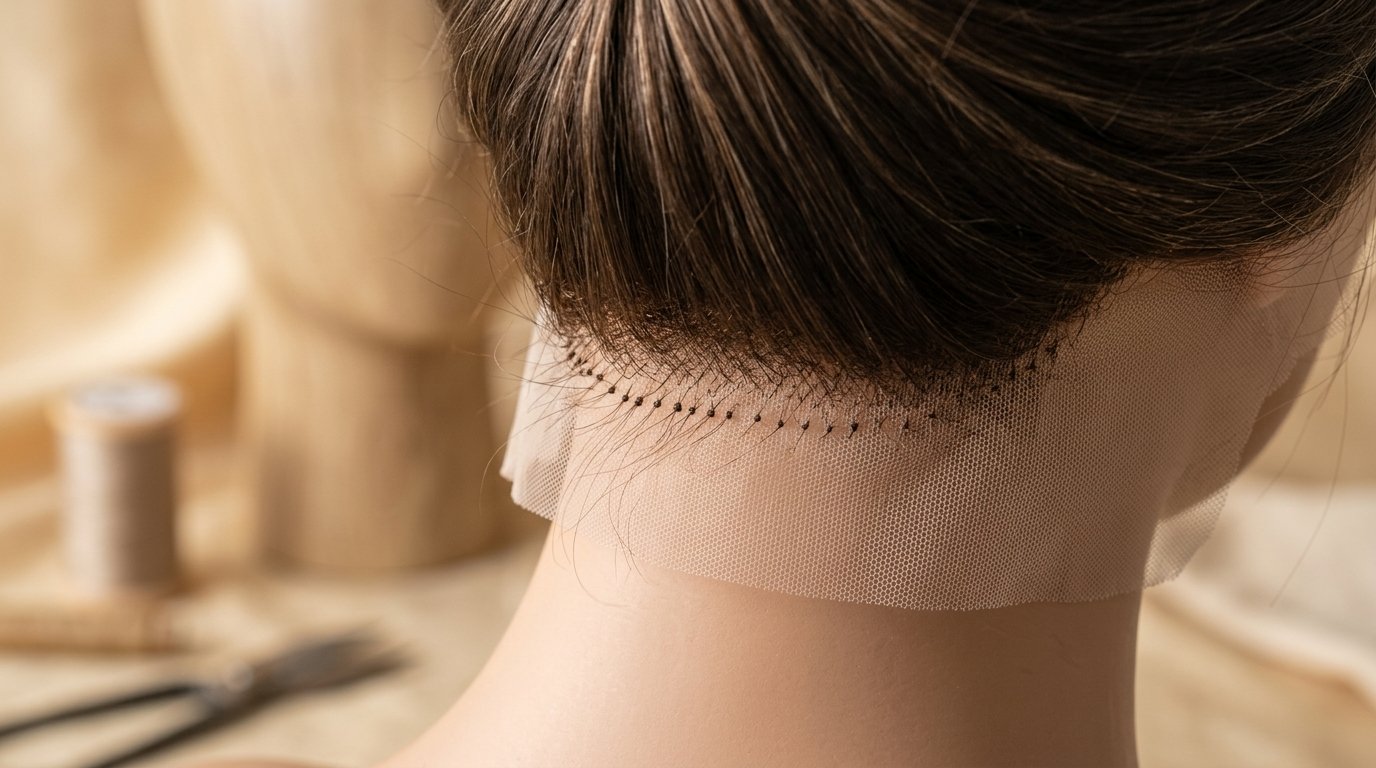
Cheap wigs use double-knots with three to four hairs crammed into every hole. That creates big, chunky black dots that look like pepper flakes. Master artisans use single micro-knots—one single hair per lace hole along the first two centimeters of the hairline. A single strand knot is so microscopic that it's virtually invisible to the naked eye without touching a drop of bleach.
2. Micronized Lace Tint Powders
Instead of chemically bleaching the hair fiber from the top, apply a micronized lace tint powder or mousse to the underside of the lace. The pigment coats the tiny knot nodes, matching them to your exact skin undertone. It creates the optical illusion that the knots have melted into your scalp, but leaves the hair protein 100% strong and undamaged.
3. High-Definition French Silk Tops
If you want absolute perfection with zero visible knots, choose a silk top. The knots are tied into a base lace layer, and then the hairs are pulled through a layer of flesh-toned Swiss silk. The knots stay completely hidden underneath the silk. You get 100% scalp realism with zero chemical damage.
The 50-Gram Pull Test: How Bleached Knots Rip Under Light Combing
In our quality testing lab, we test knot anchor strength with a digital tension gauge.
A healthy unbleached single knot on raw Indian hair requires about 95 to 115 grams of direct pulling force before it snaps. That's plenty of strength to handle normal detangling, washing, and wind.
Now test a knot that was bleached for 35 minutes with 30-volume developer. The break force plunges to just 18 to 24 grams. That's barely the weight of a few postage stamps. The slightest tug of a comb tooth snaps the loop instantly. It's not shedding—it's mechanical decapitation of the hair strand.
The Olaplex Myth: Why Bond Builders Can't Save a Ruined Knot
Stylists often tell clients: 'Don't worry, I added Olaplex (or K18) to the bleach! The knots won't break!'
Don't be fooled by the marketing hype.
Bond builders are fantastic for biological hair on your head. They help cross-link broken disulfide bonds in a living hair strand. But a bond builder cannot rebuild missing protein mass that was completely dissolved by bleach. Once persulfate chemicals eat away 40% of the fiber diameter at a sharp knot bend, no topical serum can put that physical keratin back. The structural damage is permanent.
Lace Thickness Matters: Why Bleached HD Lace Rips in Weeks
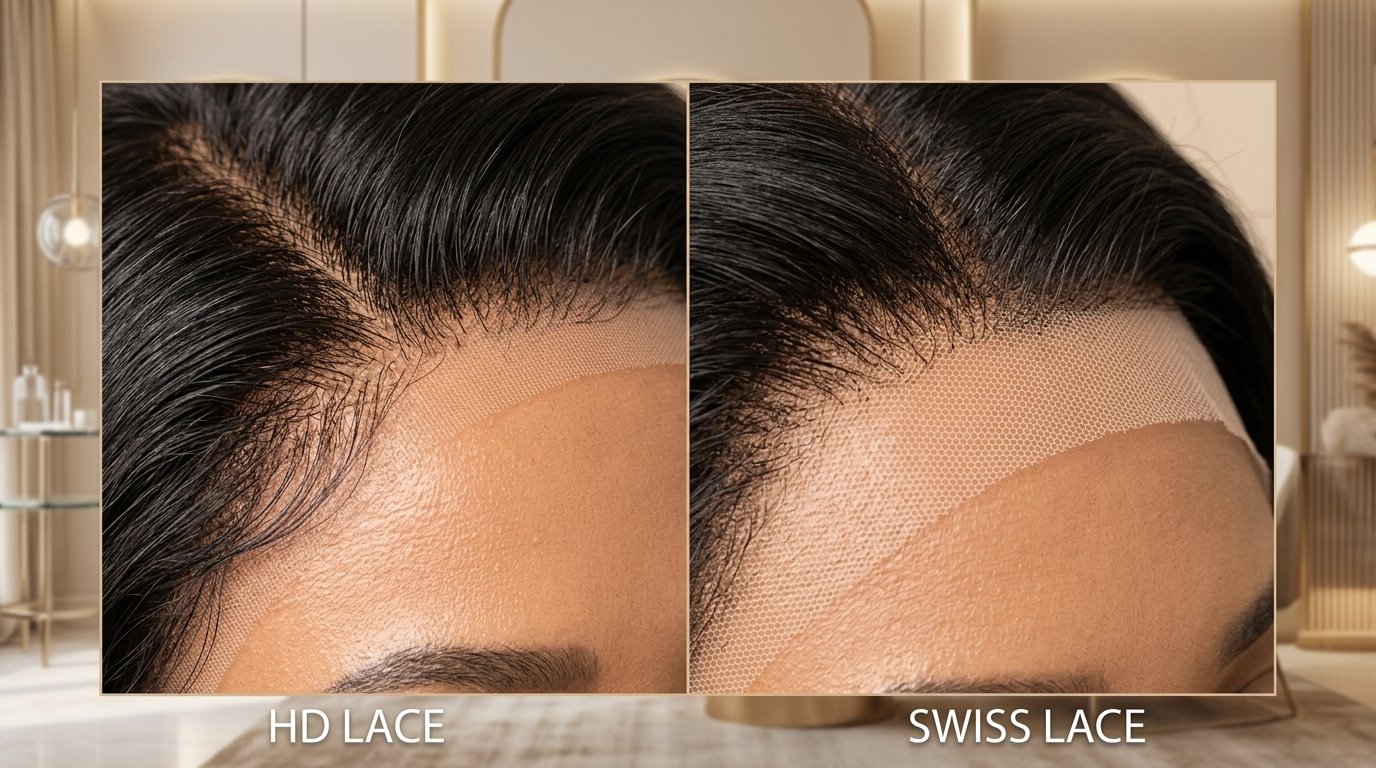
The combination of bleached knots and ultra-thin HD lace is the most fragile setup in the entire hair industry.
HD lace is woven from delicate 20-denier nylon threads (about 0.04mm thick). When bleach sits on that ultra-fine mesh, the alkaline chemicals don't just eat the hair—they also degrade the synthetic nylon polymers in the lace. The mesh becomes brittle and dry. Within a few weeks, the lace tears open along the hairline like wet tissue paper.
If you love ultra-thin HD lace, you must protect it: never over-bleach, never scrape the mesh with sharp metal tools, and always use light, gentle knot-sealing mists.
Nursing a Bleached Unit: Knot Sealers & Gentle Handling
If you already own a wig with bleached knots, here's how to keep it from balding prematurely:
- Use an Alcohol-Free Knot Sealer: Spray the underside of the lace with a flexible silicone or acrylic knot sealer. It forms a flexible rubbery film over the knots, locking them in place and buffering them against comb friction.
- Hold the Hair While Detangling: Never pull a comb straight down from the crown. Place your palm flat against your forehead lace to anchor the base, and gently detangle from the tips upward.
- Ditch Fine-Tooth Metal Combs: Never run a fine rat-tail comb through a bleached hairline. Use a soft-bristle toothbrush or a flexible loop brush to lay baby hairs.
The Silky Fusion Standard: Anatomical Micro-Knots That Never Shed
At Silky Fusion, we refuse to sacrifice your wig's lifespan for a temporary social media illusion.
We build our luxury hairlines using genuine single micro-knots on authentic Swiss lace. Our master wigmakers hand-tie single strands of raw temple hair in natural, biological micro-irregularities. The knots are so small and flat that they melt into your skin naturally without requiring corrosive bleach treatments.
You get an undetectable hairline that looks like real growing hair, backed by intact, unrotted knots that stay anchored for three to five years. No bald frontals. No shedding nightmares. Just real, enduring luxury.