How to Find Out: At-Home Undertone Tests
Before investing in new hair extensions, a custom wig, or a full salon transformation, determining whether you lean warm, cool, or neutral is the foundational first step. Here are five easy, reliable tests you can perform at home in natural lighting:
1. Stand by the Window
Using a mirror, look at the area directly in front of your eyes. Does your skin look purple or blue (cool tones), or yellow or greenish (warm tones)? Natural diffused window daylight is essential so artificial indoor bulbs don't skew your reading.
2. Let's do the blush test
Apply pink blush to one cheek and peach blush to the other cheek. Apply it harder than usual, stand near a window and look in the mirror. Does pink blush give a rosy tone to your skin? You're probably cool. Peach blush brings a golden hue to your skin and makes you feel warm. Which one suits your skin best? Cool tones look best with pink, and warm tones look best with peach.
3. Check Your Skin (Sun Reaction)
Will it burn quickly? If it does, that's a pretty good indication that you're a cool tone. Warm tones tend to tan easily, leaving the skin a brownish hue without turning immediately crimson.
4. The White Sheet Test
Please prepare a white sheet or stark white towel. When you wear it over your shoulder, you can see how the bright white fabric makes your skin stand out. If the fabric gives off a bluish-pink tinge to your skin, you probably have cool undertones. Warm tones will give the skin a yellowish, orange tint.
5. Flip Your Wrist (Vein Test)
What color are your veins? Blue veins indicate cool undertones and green veins indicate warm undertones. Can you see both? You are most likely neutral.
How to Choose the Right Hair Color
There are standard guidelines for choosing the best hair color, although there are no hard and fast rules. Here are some essential starting points for choosing hair colors:
Consider Your Skin Tone
Knowing your skin tone and undertone can often help you make a decision. For example, one commonly used rule is to pair cool hair colors with cool undertones, and pair warm hair colors with warm undertones. When choosing hair colors, some prefer to complement each other, while others prefer more contrast. More on skin tone in the following section.
Book a Hair Color Consultation
During a hair color consultation with a trusted colorist or stylist, you can discuss your ideas with a professional. You can literally ask them: what hair color looks best on me? They will help you choose a color that suits your skin tone and hair texture. In addition, they can advise on hair coloring, chemical safety, and hair care issues.
Professional formulation systems, such as those taught by global color authority Wella Professionals (famous for their Koleston Perfect and Color Touch shade architectures), emphasize precision level placement and underlying pigment neutralization to ensure hair complements facial undertones under every light source.
Use Color Testing Tools
Another useful tool is the hair color test tool. For example, L'Oréal Professionnel's Virtual Tryon is a virtual color tryon tool that lets you visualize yourself with a new hair color by simply taking a selfie or uploading a photo. So you can see for yourself. Some hair professionals use in-salon color applications to provide a personalized color experience.
Similarly, innovative digital shade finders and customized color quizzes from platforms like Madison Reed allow clients to accurately diagnose their root depth, hair porosity, and skin tone before committing to any shade.
Guide on How to Choose the Right Hair Color and Skin Tone
As mentioned above, the relationship between skin color and hair color can be expressed in different ways. However, many stylists recommend determining your skin tone and undertone before choosing hair color and highlights. Whether you have dark, medium, or fair skin, your skin tone likely falls into one of three categories: warm, cool, or neutral.
How to Identify Your Undertone
One way is to find a celebrity match, someone whose skin resembles yours. Another method is to look at the veins in your wrist. If the veins are bluish, they have a cool tone; if they are greenish, they have a warm tone; and if they are in between, they are neutral.
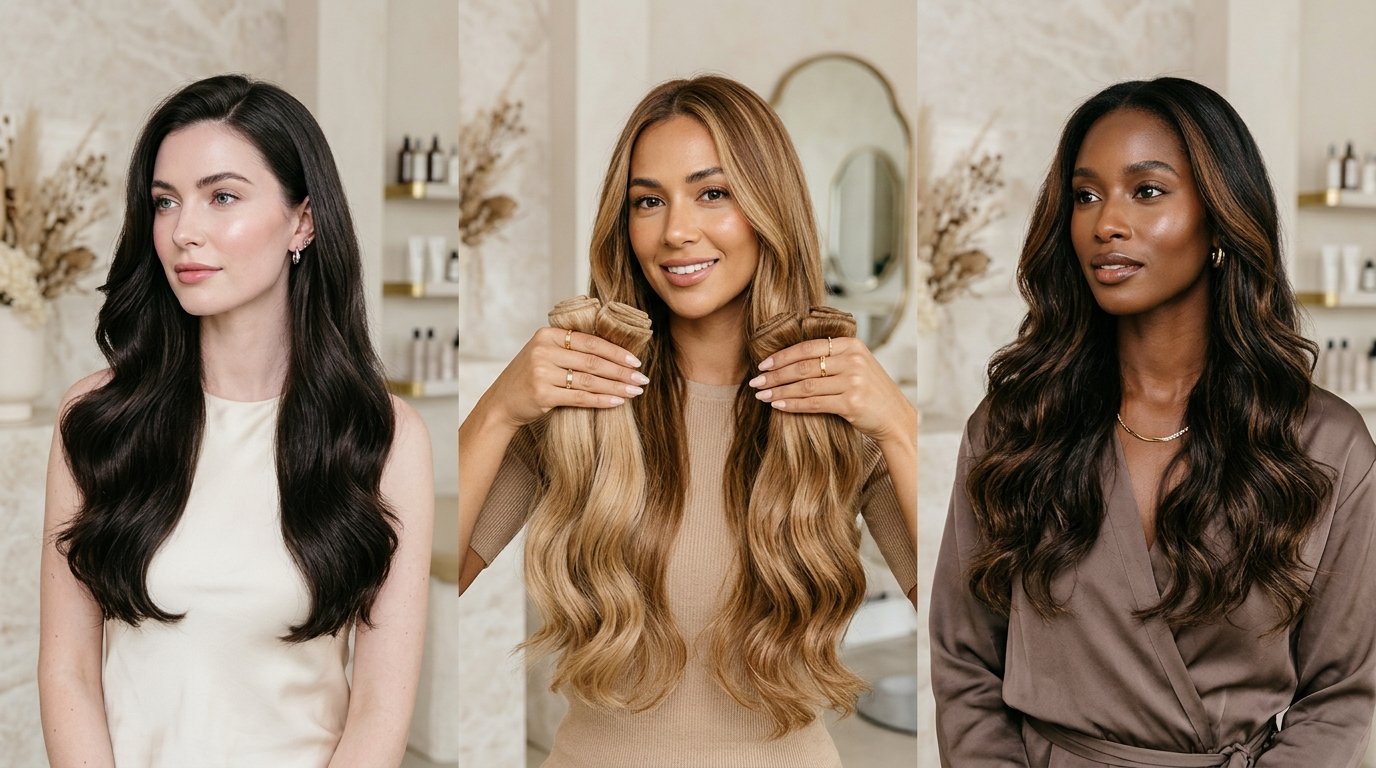
Detailed Match Breakdown: Dark, Medium & Fair Complexions
To give you clear, actionable direction, here is how each specific skin depth and undertone combination pairs with modern hair shades:
| Skin Tone & Undertone | Recommended Hair Colors | Why It Works |
|---|---|---|
| Dark skin and warm tones | Warm browns, rich caramel, golden chestnut | Brings out the golden glow in deep skin without washing out rich undertones. |
| Cool-toned dark skin | Cool black shades, dark mocha browns, blue-black | Enhances crisp contrast and highlights cheekbones without appearing ruddy. |
| Dark skin with neutral undertones | Reddish-brown, maroon, deep mahogany, burgundy | Adds warmth and dimension while balancing natural dermal pigments. |
| Medium skin with warm undertones | Cooler shades of brown, soft ash brunette | Creates a chic balance that softens excessive yellow or sallow reflections. |
| Medium skin with cool undertones | Caramel, golden brown shades with contrast | Infuses luminous warmth and keeps the complexion looking vibrant and alive. |
| Medium skin color with neutral undertones | Dark, deep shades like espresso, rich chocolate | Grounds the features with sophisticated frame and striking eye pop. |
| Fair skin and warm undertones | Silver, ash blonde, cool beige blonde | Cancels out unwanted brassiness and neutralizes facial redness cleanly. |
| Fair skin with cool tones | Strawberry blonde, copper, honey, and rich gold | Adds gentle warmth to porcelain complexions, preventing a pale or washed-out look. |
| Bright skin with neutral tones | Strawberry blonde, copper, and warm amber | Highlights translucent skin luminosity with rich, multidimensional color reflection. |
Nuances to Avoid: Shades That Wash You Out
Again, there are no absolute standards here, but consider the following guidelines to know which shades to avoid (and what to look for) based on your undertone. This is all part of how to choose the right hair color:
- For Warm Tones: Avoid hair colors that are too warm or golden. Look for cool tones that balance out the warmth of your skin. Overly brassy yellows can make warm skin appear sallow or jaundiced.
- If You Have Cool Tones: Avoid colors that are too cool as they can look washed out. To add a little warmth, choose warm gold tones or soft caramel ribbons. Stark icy ash against pale, cool skin can create an exhausted, monochromatic appearance.
- If you have a neutral tone, you're in luck! Neutral skin tones suit a wide range of hair colors. You can comfortably transition between cool espresso, rich chocolate, warm balayage, and natural black (#1B) without clashing.
Lighting Physics: Salon Bulbs vs Natural Daylight
Have you ever loved your hair in the salon mirror, only to get into your car or bathroom and wonder why the shade looks completely different? That phenomenon is rooted in optical physics and is known as metamerism.
The Salon Mirror Illusion
Most luxury salon styling stations are illuminated by warm 2700K to 3000K incandescent or halogen bulbs designed to make skin appear glowing and radiant. However, warm artificial light masks brassy undertones. Once you step outside into 5500K to 6500K full-spectrum daylight, the true underlying pigment is exposed.
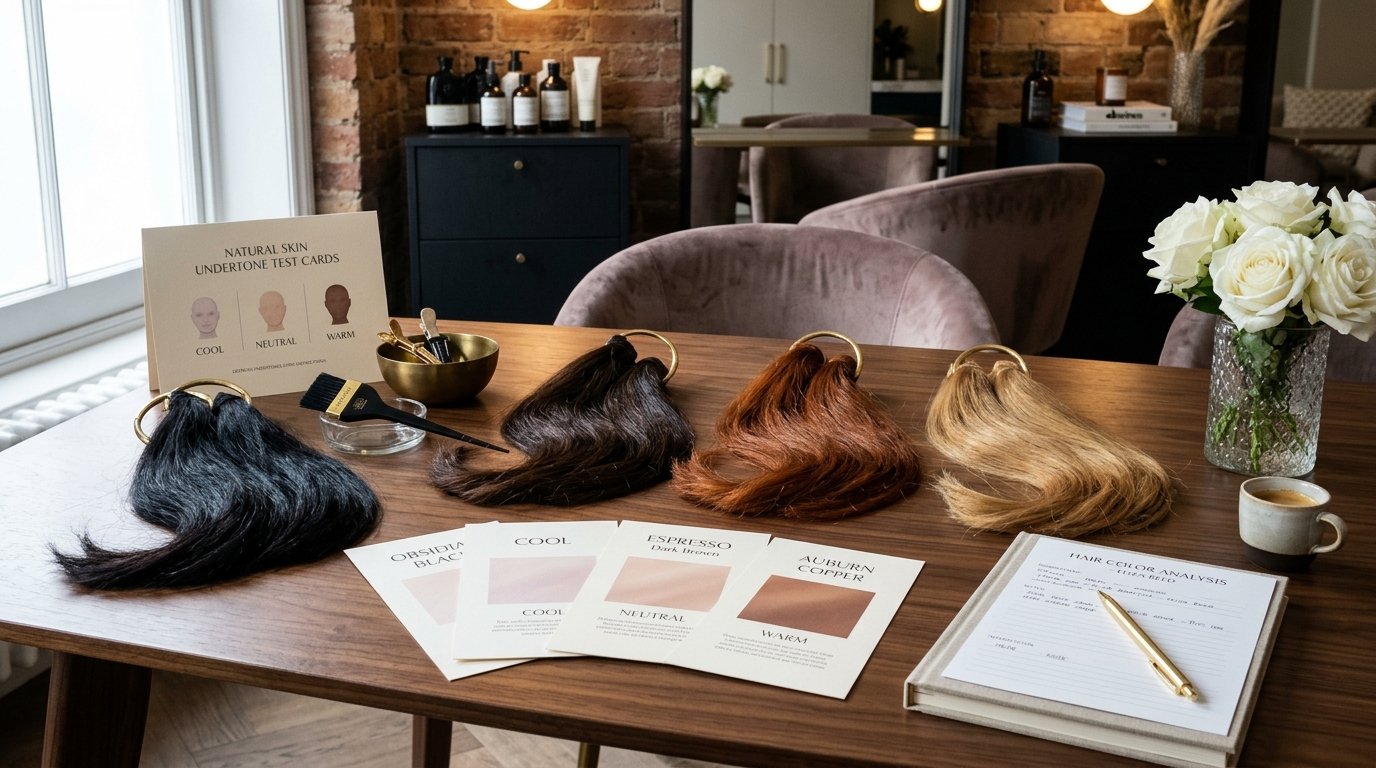
Always audit hair color swatches, extensions, and lace frontals under three lighting environments:
- North-Facing Natural Daylight: The worldwide gold standard for true color fidelity with zero glare.
- Direct Outdoor Sunlight: Blasts straight through the hair cuticles to show underlying warmth and tone purity.
- Overcast / Cloudy Lighting: Functions like a natural photographic softbox, revealing any unwanted greenish or muddy undertones.
Final thoughts on how to choose the right hair color
These are just a few ideas to get you started when choosing the right hair color. It's always best to consult a professional stylist who can help you answer the big question: what hair color suits me best? Together, you can choose a hair color that will help you look and feel your best.
At Silky Fusion, our master artisans calibrate every raw hair bundle, custom wig, and medical hair system under high-CRI 5500K daylight. We inspect your natural undertones over live video consultations to guarantee that when your custom piece arrives, the shade matches you flawlessly in every light.