What Hair Friction Really Is: The Invisible Cuticle Scraper
Think about how many things touch your hair every single day.
Your fingers, your brush, your pillow, your wool coat collar, your car seat headrest, your bath towel. Every single one of those surfaces creates friction against your hair strands. It's happening non-stop.
Friction is simply the resistance that happens when two solid surfaces slide past each other. But with hair, there's a big catch: hair isn't smooth glass. It's covered in thousands of microscopic, overlapping cuticle scales that face from root to tip. When those scales rub against rough surfaces, they catch, snag, and generate intense localized drag. It's like dragging shingles across gravel.
There are two types of friction you deal with every single day:
- Static Friction: This is the initial resistance holding two tangled strands together. It's always higher than moving friction because rested cuticle scales physically interlock like jigsaw pieces. When you yank a comb with a sudden jerk to break a knot, you're fighting high static friction. That sudden jerk is what rips cuticle scales clean off the shaft. You don't want that.
- Dynamic Friction: This is the gliding resistance while the hair is already moving through a brush. You want dynamic friction to be as low as humanly possible so the tool glides like melted butter. When it doesn't glide, you get broken strands.
Lower the friction, and tangles practically disappear. It's really that simple. We've proven it in our testing over and over.
Strand-on-Strand Friction: The Ratchet Shingle Effect
Here's a cool experiment you can do with a single strand of hair right now.
Pinch the strand between your thumb and index finger near the root, and slide your fingers down toward the tip. It feels silky, smooth, and effortless. That's sliding with the grain of the cuticle shingles.
Now slide your fingers in reverse—from the tip upward toward the root. You'll feel immediate drag, friction, and tiny clicks. You're rubbing against the grain.
Physicists call this the Directional Friction Effect:
- With the grain (Root-to-Tip): Cuticle tiles lay flat. The friction coefficient is tiny. Strands glide past each other like polished satin.
- Against the grain (Tip-to-Root): The edges of the scales collide head-on like ratchet gears. Friction quadruples instantly.
Now imagine what happens when you buy cheap commercial hair where roots and tips are scrambled together in opposite directions. Every time two strands touch, their cuticles lock like industrial Velcro. Within thirty seconds of getting wet, the whole bundle seizes into an unbreakable mat. That's why 100% unidirectional raw temple hair is the only hair worth buying.
Plastic Comb Traps: Mold Seams That Act Like Razor Blades
Check the plastic comb sitting on your bathroom counter right now. Run your thumbnail down the inside edge between the teeth.
Do you feel a tiny raised line running down the plastic? That's a mold seam from the factory injection mold.
That microscopic plastic ridge acts like a tiny serrated knife. Every single time you drag that cheap comb through your hair, those plastic ridges scrape across your cuticle tiles at a 90-degree angle, peeling off your protective 18-MEA lipid layer strand by strand. Within two months, your hair feels dry, dull, and frizzy, and you wonder why your deep conditioners aren't working.
Throw cheap plastic combs in the trash. Use seamless hand-sawn acetate combs, polished sandalwood combs, or flexible nylon detangling brushes with rounded epoxy ball-tips. Your cuticles will thank you.
The Wet Hair Drag Paradox: Why Wet Combing Pulls Harder
Most people assume wet hair is naturally more slippery than dry hair. After all, water is a liquid, right?
Wrong. In hair physics, that assumption isn't true at all.
Pure water actually creates immense friction between hair strands. When hair gets wet, water causes the cuticle scales to swell outward and soften. At the same time, capillary water tension glues adjacent strands together, creating a powerful liquid drag. That's why it pulls so hard.
If you take a comb to clean, wet hair with no conditioner in it, the mechanical drag is more than double the drag of dry hair. Combine that high drag with the fact that wet hair has lower break-force strength, and you've got a recipe for immediate snapping. Don't comb through wet hair without a slippery leave-in spray or rich conditioner to act as a lubricant. You'll regret it.
Pillow Friction: Cotton Sandpaper vs 22-Momme Mulberry Silk
You spend seven to eight hours every single night with your head pressed against a pillowcase. During those eight hours, you toss, turn, and shift your head dozens of times.
If you sleep on a standard cotton or linen pillowcase, you're grinding your hair against coarse, absorbent plant fibers all night long.
Cotton has two destructive habits:
- Moisture Theft: Cotton is a thirsty cellulose sponge. It sucks natural oils, leave-in serums, and hydration right out of your hair strands while you sleep, leaving your hair parched by morning.
- Micro-Abrasion: Under a microscope, cotton fibers are twisted and rough. They grip onto your cuticle scales like sandpaper. Every time you turn your head, cotton fibers pull at the hair, creating morning bedhead, frizz, and broken nape halos.
The Silk Difference
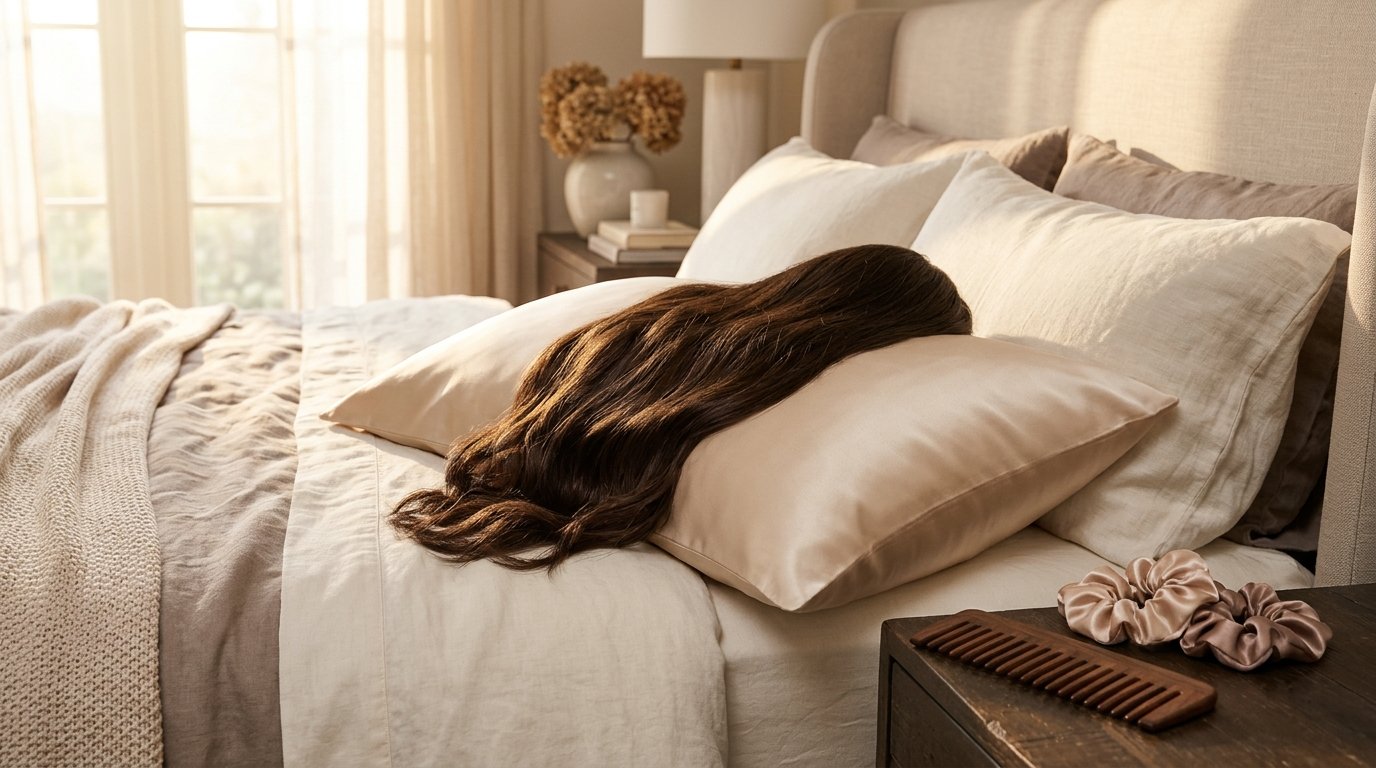
Genuine 22-Momme Mulberry Silk is made of animal protein fibers (fibroin) that are naturally round, smooth, and non-absorbent. Hair glides effortlessly across silk with zero drag. It doesn't rob your hair of moisture, doesn't generate static electricity, and keeps your blowout sleek for days.
Be careful when shopping: avoid cheap 'satin' made of 100% polyester. Polyester doesn't breathe, traps scalp sweat, and builds up massive static charges that make hair fly away.
| Fabric Material | Friction Level | Moisture Absorption | Static Generation | Impact on Hair Care |
|---|---|---|---|---|
| Standard Cotton (200–400 TC) | High (rough cellulose weave) | Extreme (sucks out oils & serums) | Moderate | Morning tangles, broken nape hair, dry frizz |
| Polyester Satin | Low to Medium (synthetic slip) | Very Low (doesn't absorb) | High (heavy static flyaways) | Cheap slip, but traps sweat and builds static |
| 100% Pure 22-Momme Mulberry Silk | Near-Zero (smooth fibroin protein) | Balanced (preserves hair moisture) | Zero (naturally anti-static) | Flawless hair glide, preserves curls & lace knots |
The Nape Knot Nightmare: Wool Sweaters & Car Headrests
Every long-hair wearer knows the dread of the nape bird's nest.
You leave the house looking sleek. Four hours later, you reach behind your neck and find a hard, tangled ball of hair matted right above your coat collar.
Why does this happen so predictably?
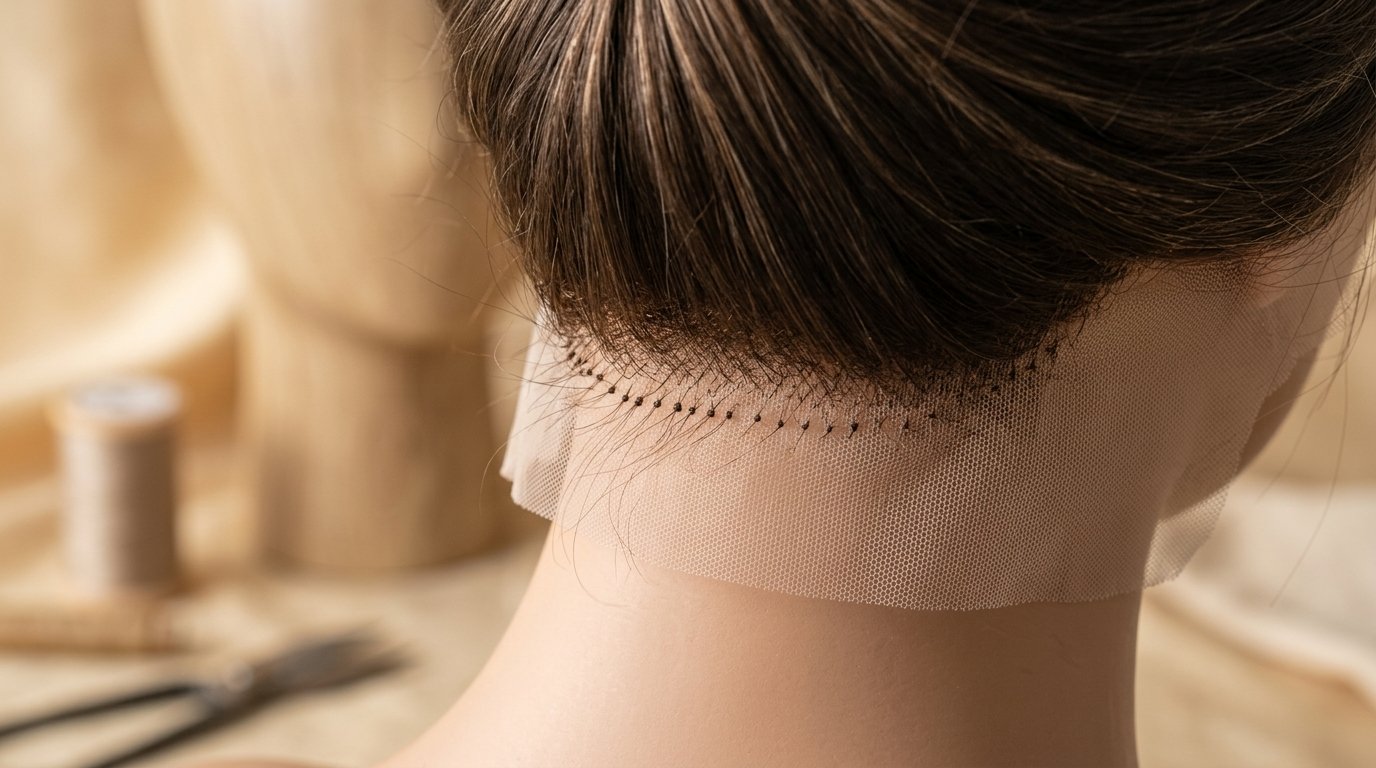
The nape of your neck is a friction trap. It sits right where coarse clothing collars (wool, heavy knits, denim, sherpa) rub constantly against your hair. Every step you take, your jacket collar rubs upward against the hair strands, pushing the cuticle scales in reverse—against the grain. Those ruffled scales catch, bind, and lock into tight knots.
How to stop it? In winter, tuck your hair up into a loose silk scrunchie, or drape a smooth silk scarf over your coat collar so your hair glides across silk instead of scratchy wool.
Detangling Mechanics: Why Pulling Down Compresses Knots
Watch how an amateur detangles hair compared to a master wigmaker.
The amateur sticks a brush right into the root area and pulls straight downward. When the brush hits a snag, they pull harder. That downward force compresses the loose knot into a rock-hard tangle, stretching the strands past their yield point until they snap.
Here is the proper bottom-up method that preserves your hair:
- Grip the hair firmly in your hand right above the tangle to isolate the root from pulling tension.
- Start combing at the bottom two inches. Gently tease the tips apart with loose, horizontal strokes.
- Once the bottom is completely smooth, move your hand two inches higher and detangle the next section down.
- Work your way gradually upward to the roots. By the time you reach the top, the brush glides all the way through to the ends with zero resistance.
It takes sixty seconds longer, but it saves thousands of strands from snapping in half.
Adding Real Slip: Cationic Conditioners & Botanical Oils
If you want to cut down on daily friction, you need the right lubricants.
Look for conditioners that contain cationic surfactants like behentrimonium methosulfate or cetrimonium chloride. Hair strands carry a natural negative electrostatic charge, especially when damaged. Cationic conditioners carry a positive charge. They magnetically bond to the hair shaft, smoothing down ruffled cuticle scales and giving the strand an ultra-slippery microscopic coating that cuts comb drag by up to 80%.
Follow up with two drops of lightweight botanical oil (pure argan, jojoba, or abyssinian oil) smoothed over the lengths. That oil layer seals in hydration, mimics natural scalp sebum, and keeps strands sliding past each other without tangling.
Sleep Architecture: Bonnets, Loose Braids & Silk Wraps
Never go to sleep with your hair loose, wet, or messy. Nighttime is when 70% of mechanical hair damage happens.
Before your head hits the pillow, do one of these three simple routines:
- The Silk Bonnet: Tuck your dry hair inside a double-lined 100% mulberry silk bonnet. Make sure the elastic band sits gently on your forehead, not tight against your fragile hairline edges.
- The Loose Three-Strand Braid: If you have long hair or extensions, weave your hair into one or two loose braids and secure them with a soft silk scrunchie. Braiding keeps strands aligned in the same root-to-tip direction, stopping them from tangling while you roll over in bed.
- The Pineapple High Bun: For wavy or curly units, flip your head upside down and gather hair into a loose high ponytail right on top of your crown using a wide silk scrunchie. Your curls stay bouncy and intact without being crushed flat under your head.
The Silky Fusion 10-Point Low-Friction Checklist
Protecting luxury hair doesn't require hours of work. Follow this simple everyday checklist:
- ✓ Sleep exclusively on 22-Momme pure mulberry silk pillowcases or bonnets.
- ✓ Detangle exclusively from bottom to top using a seamless wide-tooth comb.
- ✓ Never comb through clean wet hair without applying a slippery leave-in spray first.
- ✓ Throw away cheap injection-molded plastic combs with visible seam ridges.
- ✓ Protect the nape of your neck from rough wool coats and heavy winter collars.
- ✓ Use pure silk or satin scrunchies—never tight elastic hair ties with metal joints.
- ✓ Pat hair gently dry with a smooth microfiber wrap; never scrub with a terry-cloth towel.
- ✓ Apply 2 drops of pure argan oil to dry ends every morning for smooth glide.
- ✓ Braid long hair into loose plaits before bed or windy outdoor activities.
- ✓ Buy 100% unidirectional raw temple hair so cuticle scales never fight each other.
Take care of your hair's friction, and your hair will take care of your confidence for years.